
DigiPara Knowledge

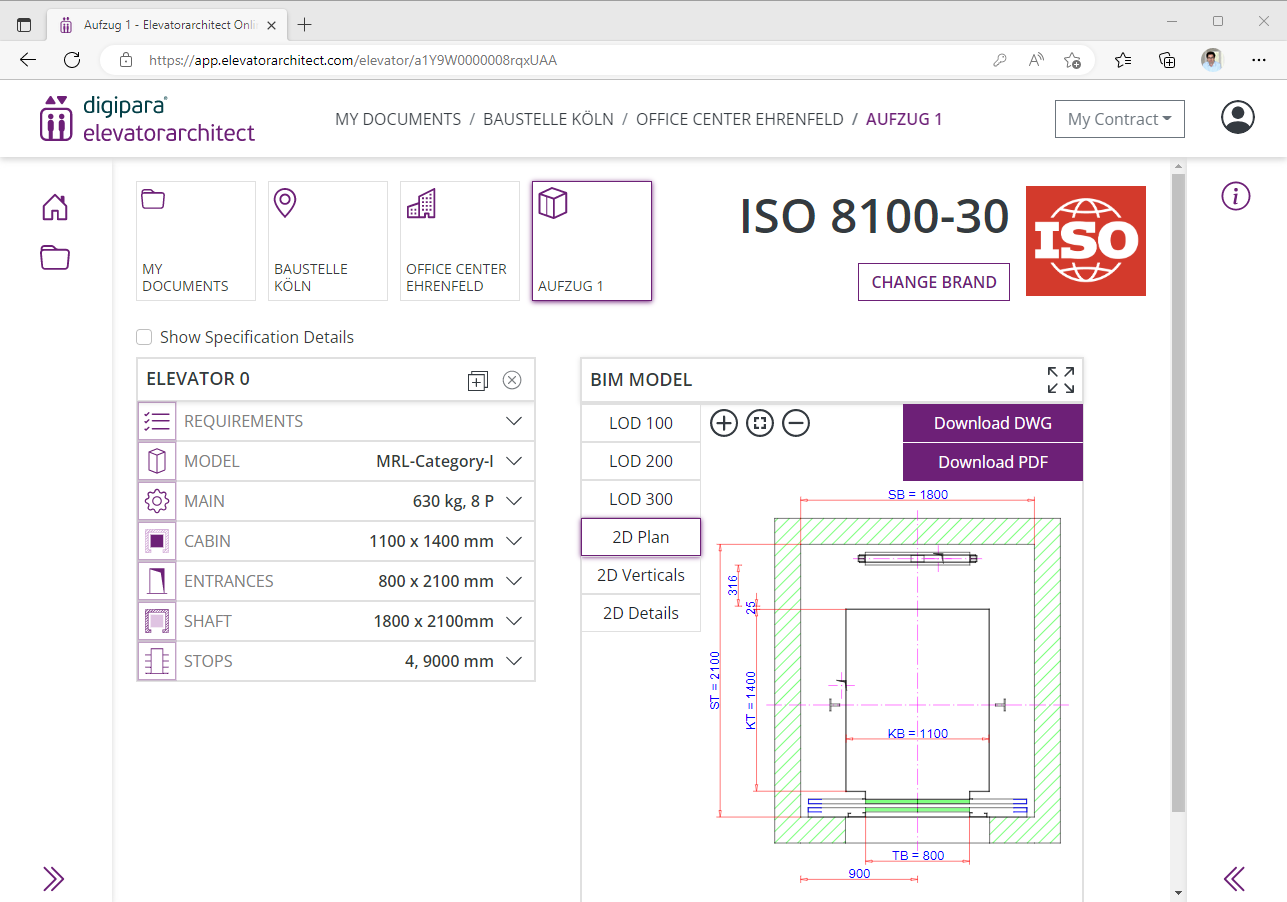
Download Your ISO 8100-30 Elevator
Download DWG
Download 2D Elevator Autocad drawing (.dwg)

Download Revit Family
Download 3D Elevator Revit Family (.rfa)


Download IFC
Download 3D Elevator Open-BIM model (.ifc)

Leading global elevator companies rely on DigiPara software


Build your ISO 8100-30 elevator
Step 1:
Register


Build your ISO 8100-30 elevator
Step 2:
Site Details


Build your ISO 8100-30 elevator
Step 3:
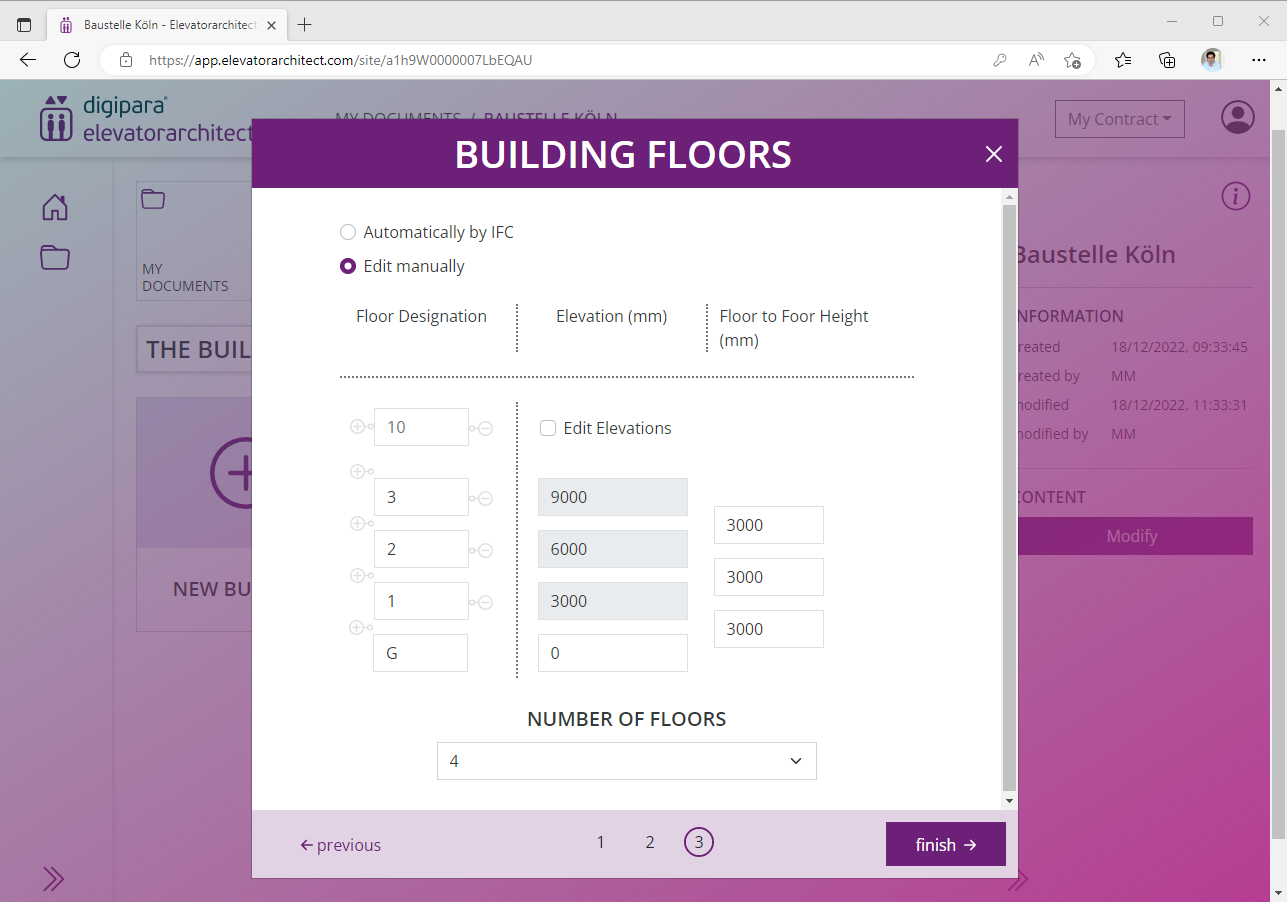
Building Details

Leading global VT Consultants rely on DigiPara


Build your ISO 8100-30 elevator
Step 4:
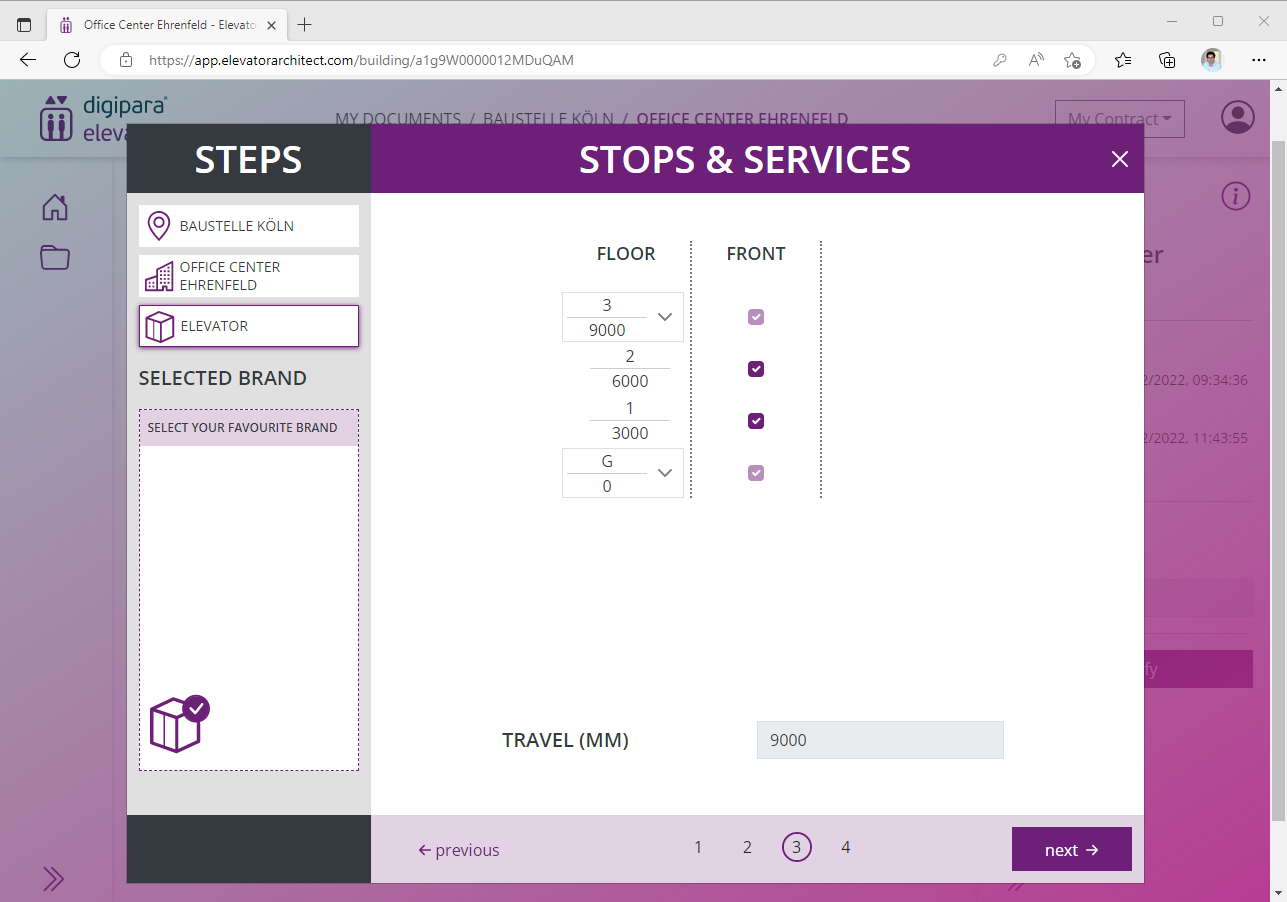
Pick Your ISO 8100-30 Elevator



What is ISO 8100-30?
The standard ISO 8100-30 describes
- What is the required shaft size
- Type of entrance arrangements
Elevator Rated Loads
- 450 kg, 630 kg, 800 kg, 1275 kg, 1350 kg
- 1600 kg, 1800 kg, 2000 kg, 2500 kg
Elevator Rated Speeds
- 0.4 m/s, 0.63 m/s, 0.75 m/s, 1.0 m/s, 1.5 m/s, 1.6 m/s,
- 1.75 m/s, 2.0 m/s, 2.5 m/s, 3.0 m/s, 3.5 m/s, 4.0 m/s, 5.0 m/s, 6.0 m/s
Elevator Shaft Dimensions
- Elevator car dimensions
- Elevator hoistway dimensions
- Elevator shaft head and shaft pit
- Elevator machine room requirements
Elevator Classes
- Class I: designed for the transport of persons
- Class II: designed mainly for the transport of persons, but in which goods can be carried
- Class III: designed for health-care purposes, e.g. hospitals and nursing homes
- Class VI: especially designed to suit buildings with intensive traffic, i.e. lifts with speeds of 2,5 m/s and above

Leading global VT Consultants rely on DigiPara